Sign In

    Enjoy FOSSwire's content? Have it delivered! Subscribe

    Linux Pre-Installs at 2.8% in the UK

    ASUS Eee PC

    The Inquirer is reporting that in the UK, 2.8% of PCs are now preinstalled with Linux. That figure has multiplied more than 28 times since January 2007.

    The number of machines shipped with Linux preloaded on them has multiplied a whopping 28 times since Microsoft launched its Vista operating system in January 2007.

    Sounds impressive, but Linux was starting from a rather small base in traditional sales channels: of all PCs sold in the UK last January through indirect channels, a feeble 0.1 per cent had Linux preloaded, according to numbers given to us by market research firm Context.

    The article hints quite strongly towards public dissatisfaction at Windows Vista being a factor. Personally I doubt that Vista has much to do with this, as I think it more likely those consumers would 'downgrade' to XP.

    Personally, I am inclined to believe that much of this rise can be attributed to machines like Asus' Eee PC, i.e. cut-down compact laptops running customised Linux distros.

    While some larger OEM vendors are now shipping Linux on selected desktop machines (including big names like Dell), I would imagine most of this statistic would be on novel computing platforms, as opposed to the humble desktop.

    So how far can desktop Linux go? Is it possible to get relatively widespread desktop usage?

    The difficulty is convincing an average user to make a conscious choice away from Windows, to something that have no familiarity with. Unless you can demonstrate extremely attractive benefits of an alternative, most people won't bother to investigate. Hence, no demand and no supply.

    [via Slashdot]

    Eee PC image licensed under CC BY 3.0, source http://en.wikipedia.org/wiki/Image:ASUS_Eee_White_Alt-small.png


    Bruce Perens on Microsoft and Apache

    You may or may not have heard that Microsoft recently sponsored the Apache Foundation, to the tune of $100,000 a year.

    While I'd love to believe that Microsoft is finally changing its tune on the open source development model and actually honestly trying to promote interoperability, it seems I am not the only one with cynical and sceptical views on Microsoft's real agenda.

    Bruce Perens, creator of the Open Source Definition and co-founder of the Open Source Initiative has written an interesting and insightful article discussing what he believes Microsoft's 'game' to be this time around.

    Just a few years ago, Microsoft exec Jim Allchin called open source "an intellectual-property destroyer, I can't imagine something that could be worse than this for the software business and the intellectual-property business." [...]

    Now they just want to interoperate, right?

    Wrong. You wouldn't have to look too far to convince yourself that Microsoft still engages in hard-edged fighting against open source. The Office Open XML standard has recently been pushed through ISO with so many irregularities in process that four nations complained. There already was an ISO-accredited office document standard called OpenDocument, created by the OpenOffice team. It was one-tenth the size of Microsoft's effort, and did the same work. But it would have put Microsoft and open source on an equal footing. Office Open XML, in contrast, is 6,000 pages long, so large that it's not possible for a programmer to learn it in his or her useful lifetime. That'll keep the open source folks from ever handling files quite the same way that Microsoft does.

    He also touches on some of the wider issues that the open source development model faces today later on.

    It is definitely an interesting read if you're interested in these sort of issues.


    Ext4 - a new filesystem

    The filesystem used in the vast majority of Linux (and to a lesser extent on other Unix) distributions is the ext3 filesystem, which stands for extended filesystem.

    Slashdot recently pointed to an article on IBM DeveloperWorks discussing the new ext4 filesystem currently in development, and some of its new features.

    So what is a filesystem really? And why is the development of ext4 and the new features it brings to the table important for open source platforms?

    Filesystems

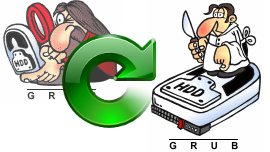
    A filesystem is a very important piece of software in your operating system. In essence, a filesystem is a method of organising files and directories on your hard disk and it allows you to actually store persistent data.

    Modern filesystems allow you to do much more than just define a tree of directories and files and store data in them, though. Features such as access control and journalling (keeping a log of all events on the volume to make recovery easier) are some of the things that a filesystem does.

    What's all the fuss about ext4?

    Ext3 is probably the most popular filesystem in use on Linux distributions today. The reasons for that are that it has a lot of modern features, including journalling and is a very stable bit of software (which of course, is very important if you are entrusting all your data to it).

    It doesn't necessarily do everything that is possible these days, though, and so the ext3 source code was forked into a new project to try and add these features, as the IBM article explains.

    The biggest new thing is the maximum sizes that ext4 can support, and support for 64-bit filesystems. While the figures for the maximums in ext4 might seem astronomical at the moment (for example 1 exbibyte (EiB), or 1073741824 GiB), if trends continue, we may actually be needing to extend the current limits.

    As I've already mentioned, filesystem technology has to be absolutely rock solid. It would be terrible to put all your important data into a filesystem, only to have an obscure bug corrupt it all and render it unreadable.

    This is why everything has to be planned so far in advance when it comes to filesystem technology. The time it will take to get ext4 from its current experimental stage to when it is as stable as ext3.

    And that's why it's a big deal. It might seem ages off yet, and many of the features will seem a bit unnecessary right now, but all this work has to happen way in advance.


    1. 1
    2. 2
    3. 3
    4. ...
    5. Go to