Open Video on the Web: Where Are We Now?

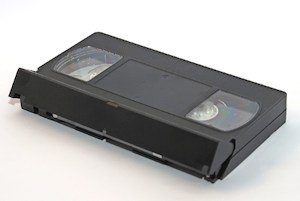
Picture of opened VHS tape from http://www.sxc.hu/photo/992499

Back in January 2009, I wrote a post on opening video on the web. At the time, the Mozilla Foundation had just invested $100,000 in the Wikimedia Foundation to use Theora for videos on their sites.

In the last year and a half, the situation with video on the web has changed quite a lot. So what do those changes mean for free software and open source — where are we now with video on the web, are we any closer to open source and patent free web video?

HTML5, audio and video tags

Something really important has happened in the last 18 months. Adobe Flash, long the dominant platform for delivering web video, is in trouble. HTML5, a standard which will soon be supported by the major browsers, supports audio and video tags which are designed to allow video and audio playback to be supported natively by the browser — no plugins required.

This all sounds great in theory — the standardisation of this way of embedding content should make interoperability with web video even better, but unfortunately these tags alone don’t tell the whole story. audio and video themselves are just ways to embed audio and video content; you still need audio and video codecs that the browser will support. This is where things still remain very messy and riddled with legal issues.

Codec Soup: H.264, Theora, VP8 (WebM) ...

I discussed Theora and H.264 in my previous post on this subject and many of the issues that were present then still are there now.

H.264 seems to be one of the best codecs from a technical point of view and has wide support from commercial vendors. Most notably, there are a significant body of consumer devices that now have H.264 encoding and decoding hardware. While covered by patents and having a possibly uncertain future (it is free of charge only for personal use until the end of 2015), there is only a single body that holds all the patents and rights, the MPEGLA, making it more attractive for businesses who otherwise may fear being sued.

Theora logo

Theora has traditionally faced criticism for being technically inferior to competing codecs like H.264, but it is supposed to be an open standard which can be distributed without licensing fees and used without issues in completely open source systems, which should make it ideal. Unfortunately, it isn’t as simple as that. Owners of video compression patents feel threatened by competing, free technologies like Theora, and recent rumours suggest that Theora could be the target of legal threats because of some of these patents which it supposedly infringes upon.

WebM logo

There’s also a new kid on the block, WebM. With the backing of Google, WebM is a separate attempt from Theora to create a royalty free video compression standard which works great on the web. The codec used for the video is VP8, originally developed by On2 Technologies (who also developed VP3, which is now Theora). It is supposed to be technically superior to Theora, the implementation code is open source under the BSD licence and Google have also freed the patents covering the technology. So could WebM be the ideal open source solution if Theora is stuck in the legal doghouse? Unfortunately, it still remains unclear — the patents granted to various technology companies for video technology are so numerous and fundamental that it is likely VP8 could be legally challenged in the same way. To be clear: less direct threats have been made against WebM, and the backing from Google, Mozilla and Adobe could help defend against any future problems, but it still remains a concern. It is exactly that uncertainty that makes the open solution less attractive to businesses who fear legal action.

Browser Support

One of the big ideas of this new web video technology, as I explained earlier, is not needing any plugins to play web video. Of course, that will only work in practice if each browser supports both the HTML5 video tag and the right codec. There’s a useful table on codec support on Wikipedia, but I’ll summarise here.

Mozilla supports Theora in today’s Firefox and by version 4 will also support WebM. They have decided not to support H.264.

Apple’s Safari will support only H.264.

Internet Explorer, from version 9, will support H.264 natively, and WebM will work if the user has separately installed the WebM codec.

Google Chrome supports both Theora and H.264, will soon support WebM in the regular release.

In fact, recent builds of Firefox, Opera and Flock are now WebM-compatible.

My guess is that H.264 is likely to become the most popular format for HTML5 web video, particularly given the momentum it already has due to the Apple iPad, but if Mozilla stick to their word about not supporting it, website owners will probably be forced to encode in two formats – one for 'most’ browsers, H.264 and either WebM or Theora for Firefox users, along with other browsers such as Opera which are unlikely to support H.264.

Conclusion

So, where are we now with open video on the web?

Sadly, the answer is — still in a mess. There is, I think, still hope for truly open video on the web. There are significant players in this space, including Google, who seem to have the will to get behind open technologies and to challenge the dominant position of H.264 and the MPEGLA. The momentum behind WebM, in particular, and the impressively wide browser support already gained by Theora, means that the free software and patent-free approach still has influence in what will happen in the future.

I think one of the pivotal issues right now is what decision Mozilla will make about supporting H.264. It’s a tough decision, but if they stand their ground on only supporting Theora and WebM, there will either be a backlash against Firefox (a risk it seems they must take), or website owners will have to also support either of those formats in order to serve their Firefox users, meaning H.264 will not become the new de facto standard, or at least not on its own.

This is a really complicated and controversial issue, but it’s one that will be key to the future of the web. As challenging as this is, I believe that if those with influence stick to their principles, we will at least have choice about which technologies we want to use.

Our sister site YouMakeMedia has a tutorial for converting older FLV Flash video to H.264 if you do need to support those clients for the videos on your site!

VHS tape image is from http://www.sxc.hu/photo/992499. The Xiph Fish Logo and its theora.org variant are trademarks of Xiph.Org. The WebM logo is owned by The WebM Project.

WattOS — a lightweight, low-power Linux

WattOS logo

A lightweight Linux distribution often seems to require making sacrifices — using a UI which many users would find unfamiliar and using software which is heavily cut down in functionality.

WattOS is a really interesting lightweight Linux distribution that is based on Ubuntu 10.04 (as of WattOS R2). As the name might suggest, it is also focused on low power usage and is said to work well with older and less powerful hardware.

WattOS blank desktop

At the same time, though, it runs familiar software, like Firefox, Empathy for instant messaging and has a friendly user interface. It uses Openbox and LXDE to form the desktop environment, and while many Linux users may not have even heard those names, the combination works brilliantly — keeping the software lightweight and super speedy, but without behaving oddly or describing things in an unusual way. In short, a non-technical user certainly won’t have a problem with the way the desktop works if they have used full-fat Ubuntu before.

WattOS running Firefox 3.6

While older machines might struggle to run the latest and greatest Firefox 3.6, its inclusion in WattOS, again, ensures good compatibility with websites. The newest R2 release also includes the Microsoft TTF fonts package and Adobe Flash Player 10.1 out of the box, so you don’t need to do any configuration to have a usable, modern web browser where websites behave as expected and render as intended.

In other areas, the developers have rightly steered away from the traditional productivity choice of OpenOffice.org to offer Abiword for word processing and Gnumeric for spreadsheet tasks. There is also RhythmBox, the Totem Movie Player, as well as microblogging client Gwibber and the Transmission BitTorrent application, as well as a few other utility applications that can be found in Ubuntu. Again, though, if you need or want anything more heavy duty, or want something that is not offered, you have the flexibility of the entire Ubuntu software catalogue at your disposal.

WattOS showing Ubuntu Software Sources selection

So, the interface is good and it has great software, but how does it actually run?

If you have a fast machine, very quickly, and if you have a slower machine, probably with acceptable performance, depending on the hardware (you can see what success others are having with older hardware on their forums). Even in Live CD mode, things are snappy, as you would expect; the only really significant risk of slowdowns being when running Firefox. It’s a sensible tradeoff in order to have a modern browser, but, again, it is the one area that might present issues on those older computers.

The other focus of WattOS is, of course, low power consumption. The distribution ships with its own power management software. Unfortunately, it needs a little bit of manual configuration post-install to work (you have to add the user to the powermanagement group) and the configuration interface doesn’t have the same feel of simplicity as the rest of the OS. I personally don’t have the right hardware to be able to really test it, but it does offer Auto and Manual power management modes and Performance and Power Saving settings. How much difference it would make to battery life, then, is something that would be difficult for me to comment on.

WattOS power management software

What strikes me most about WattOS is it seems to combine the best of both worlds — it is genuinely fast and lightweight and supports older hardware, but comes without the significant compromises in functionality and in ease of use that often accompany other cut-down distros. This makes it an excellent operating system choice for many applications — a simple web browsing box for beginner computer users, a way to give a new lease of life to older hardware, a netbook OS and even in a kiosk or thin client situation. In many cases, it would even work well just as a live CD, even without the hassle of installing it alongside anything else.

WattOS file management

If you are looking for a lightweight Linux, WattOS is most definitely worth a look. You can download the new R2 release from planetwatt.com.

Do you have experience with lightweight Linux distributions? What do you think of WattOS? Have your say in the comments.

Ohio LinuxFest is ready for 40 Years

Ohio LinuxFest is definitely one of my favorite Linux and open-source conferences. If you’ve never been to a Linux conference, now is a great time to begin. If you have, it’s also a great time to experience this conference.

The main reason you should go? It’s free. OLF is funded by sponsors, so you aren’t required to pay to get in (though you certainly can upgrade your conference pass if you choose). The only thing you have to do is register. Registration closes on September 19th, so be sure you’re not left out!

From Ohio LinuxFest: Back to the Future of Linux!:

bq.
Don’t miss your last chance to register for Ohio Linux Fest! A mere two weeks away on September 25-27, it’s coming faster than a Free Software freight train!
...
People come to OLF to meet with others that have helped create things like the backbone of the Internet, FireFox, Linux and the Apache web server. If you come to Ohio Linux Fest you will gain a unique perspective of this community. You will see the technology and some of the faces that have made possible such a wonderful change to the digital world.

There are some great speakers at the event, including Doug McIlroy, the inventor of the UNIX pipe, as a keynote speaker:

The featured keynote speaker this year is Doug McIlroy, a major contributor to the great grandfather of Linux and a direct contributor to code that powers many of the Unix products of today. Doug invented the concept of pipes inter-process data streams that no true Unix / Linux geek can live without. This concept made its way into less stable products as well from other proprietary vendors.

It’s definitely an event you don’t want to miss. Visit the Ubuntu booth and there’s a good chance you’ll see me there.

OLFU training classes will be offered the day before the event on the 25th. This is, literally, a bargain. This years training will be guided by LOPSA Where else can you go and get a days worth of training for only $350.00?
What other crazy things will you miss out on if you miss OLF? You’ll miss cool Tee Shirts, the yearly After-Party, the Free-Geek Columbus Linux Basics and more. Don’t be sorry that you didn’t register for the event.

There’s a rumor about that some people go to OLF for the after-party.

Regardless of your reason, make it a point to register. You’ll have a great time, trust me.

See you there!

  1. 1
  2. 2
  3. 3
  4. 4
  5. ...
  6. Go to

Sign In

    Enjoy FOSSwire's content? Have it delivered! Subscribe